Cosmology - The First 3 Minutes
OPENING QUESTIONS:
1) What is the significance of "Planck Time?"
2) Please elaborate on why it is considered scientifically invalid to hypothesize about what happened *before* Planck Time.
OBJECTIVE: I will be able describe the Universe within the first 3 minutes after "Planck Time" after today's class.
WORDS FOR TODAY:
- Planck Time ("10-43 sec after the Big Bang")
- Big Bang
WORK O' THE DAY:
Upcoming creative project:
Please draw a hydrogen atom! (Seriously, it's really easy!) Sketch in pencil first, compare with your team and then fill in the details in color pencil!
═══════════════════════════
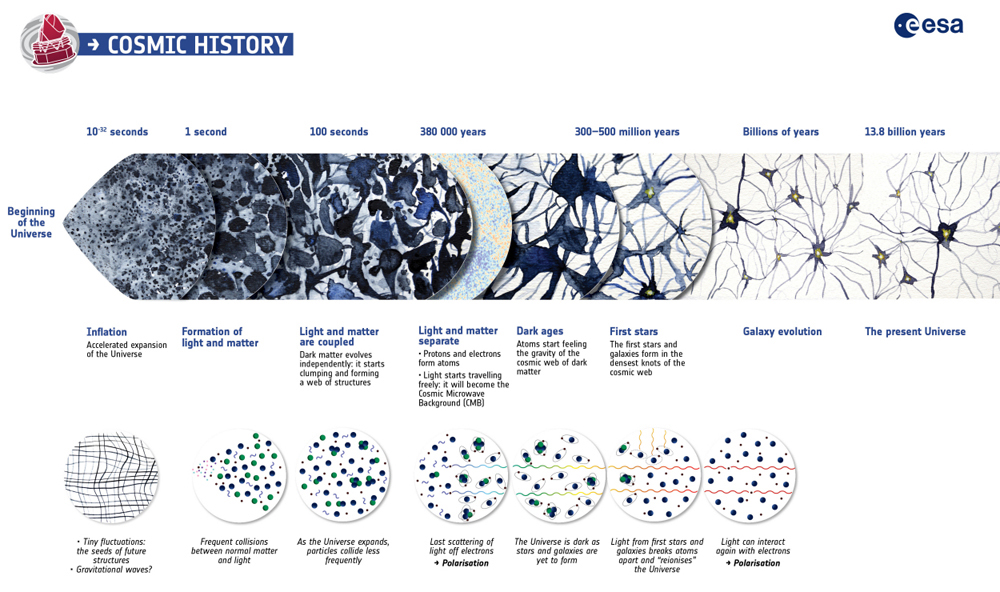
Now let's review our Big Bang Time Line with eye towards time, temperature and the size of the Universe (We'll need to supplement this chart with additional information).
Towards that end, try to avoid just copying down numbers-- it will be *most* helpful to try and develop a point of view of how the Universe changed over time.
Although we'll be evaluating how the Universe changed over time, we REALLY need to emphasize the first 3 minutes. Some astounding events happened then!

Here are the time line features you need to know:
🌀 Planck Time: Universe begins; rapid inflation expands cosmos from atom-sized to grapefruit-sized in the tiniest fraction of a second
10⁻³² sec — 10²⁷ K
🔥 Post-Inflation: Universe is a hot, dense soup of elementary particles.
10⁻⁶ sec — 10¹³ K
⚛️ Basic Matter Forms: Elementary particles combine into protons & neutrons as the Universe continues to expand and 'cool'.
3 minutes — 10⁸ K
🌑 Dark Era:Why????
300,000 years — 10³ K
💡 Light Breaks Free The Universe becomes transparent as Cosmic Microwave Background Radiation is created
~1 billion years — ~200 K
✨ Stars & Galaxies Form: Gravity pulls hydrogen & helium into clouds, forming galaxies & first stars.
13.7 billion years — ~2.7 K
🌌 Current Era: Galaxies evolve, stars die and create heavier elements, leading to new stars & planets.

We'll continue our conversations about temperature and such tomorrow with the following
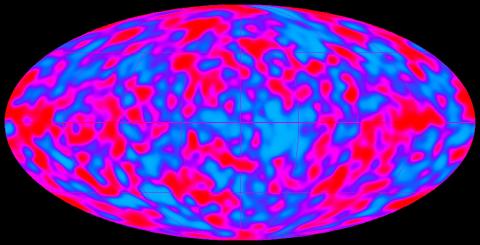
Three Satellites have measured CMBR in the last 25 years:
COBE: COsmic Background Explorer (NASA) from 1989 - 1993 (Two principal scientists won the 2006 Nobel Prize for their work on this project). According to NASA, "The cosmic microwave background spectrum was measured with a precision of 0.005%."
═══════════════════════════
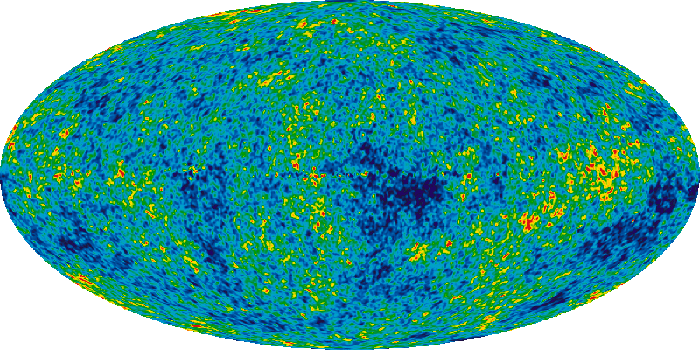
WMAP: Wilkinson Microwave Anisotropy Probe (NASA) active from 2001 - 2010 (according to NASA the WMAP probe improved the measurements made by COBE by an astounding 68,000 times).
Here is a tough (but readable) summery of that mission
═══════════════════════════
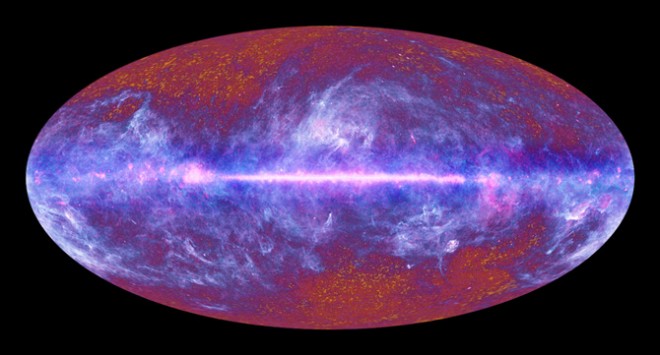
Plank Space Observatory (European Space Agency) active from 2010 . This data was shown to have temperature resolution of the order of one part per million:
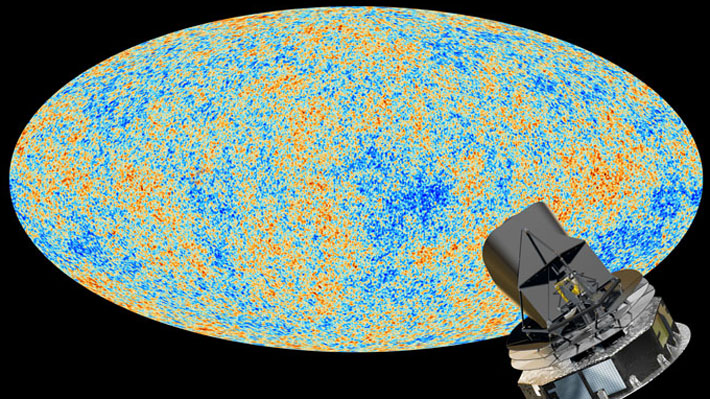
Planck Space Observatory "All Sky" Image - 2013
Here is a European Space Agency timeline of the Universe based on Planck data: